This post intentionally mirrors Paul Graham’s essay with the same title. I finally launched my YC for Politics this summer and the first class was amazing! Excited to share what went so well and thrilled to plan future classes!
The first Positive Politics Accelerator class has just finished. We were surprised with how well it went. Overall, only about 10% of first time politicians succeed, but if I had to guess now, I’d predict three or four of the five founders in this class will make it in politics.
I would have been happy if just one of the five seemed ready for politics by the end of this class. What’s going on? Did some kind of anomaly make this summer’s applicants especially good? I worry about that, but I can’t think of one. I’ll find out this fall.
The whole summer was full of surprises. The best was that the hypothesis I was testing seems to be correct. Ambitious optimists can get into politics quickly and do good. This is good news for two reasons: (a) it’s an encouraging thought, and (b) it means that Positive Politics, which is predicated on this idea, is not hosed.
Age
More precisely, the hypothesis was that success in politics depends mainly on how smart and energetic you are, and much less on how old you are or how much money you have. The results so far bear this out. The 2026 summer founders ranged in age from ~25 to ~40 (average ~33), and there is no correlation between their ages and how well they’re doing.
This should not really be surprising. Founding fathers Hamilton, Jefferson, and Madison wrote their most famous works at 32, 33, and 36. [1] Young politicians are not a new phenomenon, but the trend has gone the other way as elections got too expensive for younger people to run.
Another of our hypotheses was that you can get into politics with a lot less money than most people think. Other politicians were surprised to hear that we spent less than $5,000 per founder. But we knew it was possible to start on that little because we started this Accelerator on less than $10,000.
And so it proved this summer. One week of 12+ hour days is enough to go from idea to bill. We filmed a Demo Day video for each founder, and all five founders had at least one specific bill they’re pursuing. Three founders also had plans to build an organization around their mission.
The experience of the PPA suggests that if you let motivated people do real work, they work hard, whatever their age. As one of the founders said, “I knew how much politics could change the world, but I didn’t know how much it could change my life.”
Morale
The summer founders were as a rule very idealistic. They also wanted to be personally successful. These qualities might seem incompatible, but they’re not. Four of the six of us are already startup founders, with multiple exits. We want to win personally while changing the world.
I think this makes us more effective as political founders. As hard as people will work for money, they’ll work harder for a cause. And since success in politics depends so much on motivation, the paradoxical result is that the people who make the most political impact are those who aren’t in it just for the politics.
I never considered it until this summer, but this might be another reason bills led by founders tend to do better than those run by politicians. Perhaps it’s not just that founders understand the solutions better, but that they’re driven by more powerful motivations.
I suspect this is another reason founders beat parties. Founders can be innovative and release version 1s that are light enough to evolve. In big parties, all the pressure is in the direction of over-engineering.
What Got Learned
One thing I was curious about this summer was where these founders would need help. That turned out to vary a lot. Some I helped with legislative advice — for example, how to rewrite a bill to make it more likely to pass both the House and Senate. Most I helped with strategy questions, like which bill to pick, where to find co-sponsors, and who else is working on these problems. Nearly all wanted advice on how to make money before or during politics, like with startups and books.
It was surprising — slightly frightening even — how fast they learned. Each day of this sprint week, we had a special guest join us for a meal and share their expertise. We started these daily meals with each founder sharing a <10 word elevator pitch of their idea. The early pitches were frankly vague and uninspiring. We worked hard to refine these pitches throughout the week, but I wasn’t expecting huge progress by Friday.
The founders then proceeded to give fabulously slick presentations on video Friday. Gone were the generic ideas. In their place were specific bills. It was as if they’d spent the past week at acting school. I still don’t know how they did it.
Perhaps watching each others’ pitches helped them see what they’d been doing wrong. Just as happens in college, the summer founders learned a lot from each other — maybe more than they learned from me.
I don’t want to give the impression there were no problems this summer. A lot went wrong, as usually happens in politics. One other founder had to drop out of the class last minute to more directly focus on their politics. Multiple founders had to pivot through different ideas and bills at the federal, state, and local levels before finding their lanes. And of course there were the usual nightmares of me, a highly hyperactive individual, managing all logistics for a one-week live-in retreat. Thank you to delivery apps.
So far, though, the news is all good. In fact, I was surprised how much fun this week was for me too. The main reason was the founders. They’re so ambitious and optimistic. And they seemed to love the class too. Dinners each went way past the scheduled times, with founders lingering in the kitchen still talking politics for hours after doing the dishes and cleaning up.
I was surprised how much time I spent making introductions. Fortunately I discovered that when a founder needed to talk to someone, I could usually get to the right person by at most one hop. I remember wondering, how did my friends get to be so eminent? And a second later realizing: shit, I’m almost forty.
Another surprise was that the one-week sprint format, which we were forced into by the constraints of people being able to travel to DC, turned out to be an advantage. When I started Positive Politics, I planned to operate like other political accelerators, picking large classes of politicians to support each election cycle. The PPA was just an experiment to get started. But it worked so well that we plan to do all future classes this way, with one more class this fall, 4+ classes next year, and ideally 10+ classes per year long-term.
Independence
I’ve heard Positive Politics described as a future political party. Actually, we’re the opposite: parties exert more control than donors, and we make a point of exerting less. Among other things, parties usually make you follow their platform. That seems the wrong model. Politicians should pick their own policies. This makes politics personal for our founders.
Indeed, one quality that all the founders shared this summer was a spirit of independence. I could see that the founders’ attitudes changed during the class. They seemed a little surprised at having total freedom in politics. Then they ran with it.
When I asked the founders what surprised them most about politics, one said “it’s not easy, but it is simple if you know where to go.”
It will take more experience to know for sure, but my guess is that a lot of founders could do this — that if you put people in a position of independence, they develop the qualities they need. Throw them off a cliff, and most will find on the way down that they have wings.
If I’m right, “founder” will mean something different in twenty years than it does now. Increasingly, as it once was, it will mean the people who run our country. Positive Politics is just accelerating a process that would have happened anyway. Power is shifting from the people who deal with money to the people who create laws, and if our experience this summer is any guide, this will be a good thing.
Notes
[1] Hamilton, Jefferson, and Madison had already been active in state and national politics for over a decade each before writing the The Federalist Papers, Declaration of Independence, and US Constitution.
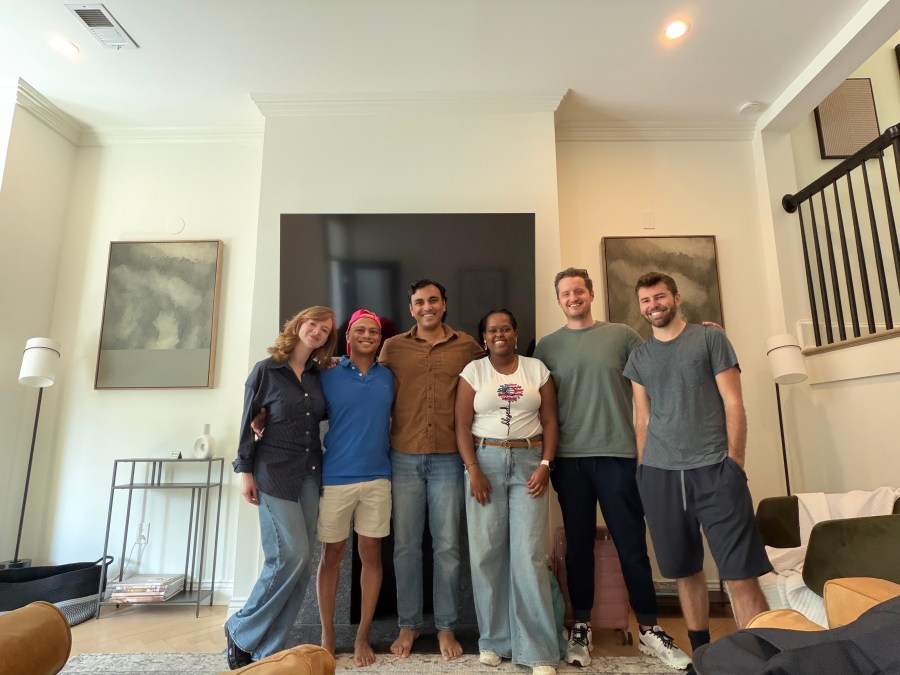
The image below shows us, the 2026 summer founders, in the living room of our rowhouse after wrapping the Demo Day videos.
Thank you to Paul Graham for being the inspiration for this entire YC for Politics idea. I still remember how you slowed me down in office hours and helped me pitch the best version of my idea. I aim to have a similar impact in politics! And my khaki shorts in our final group photo are an extra homage to you!